
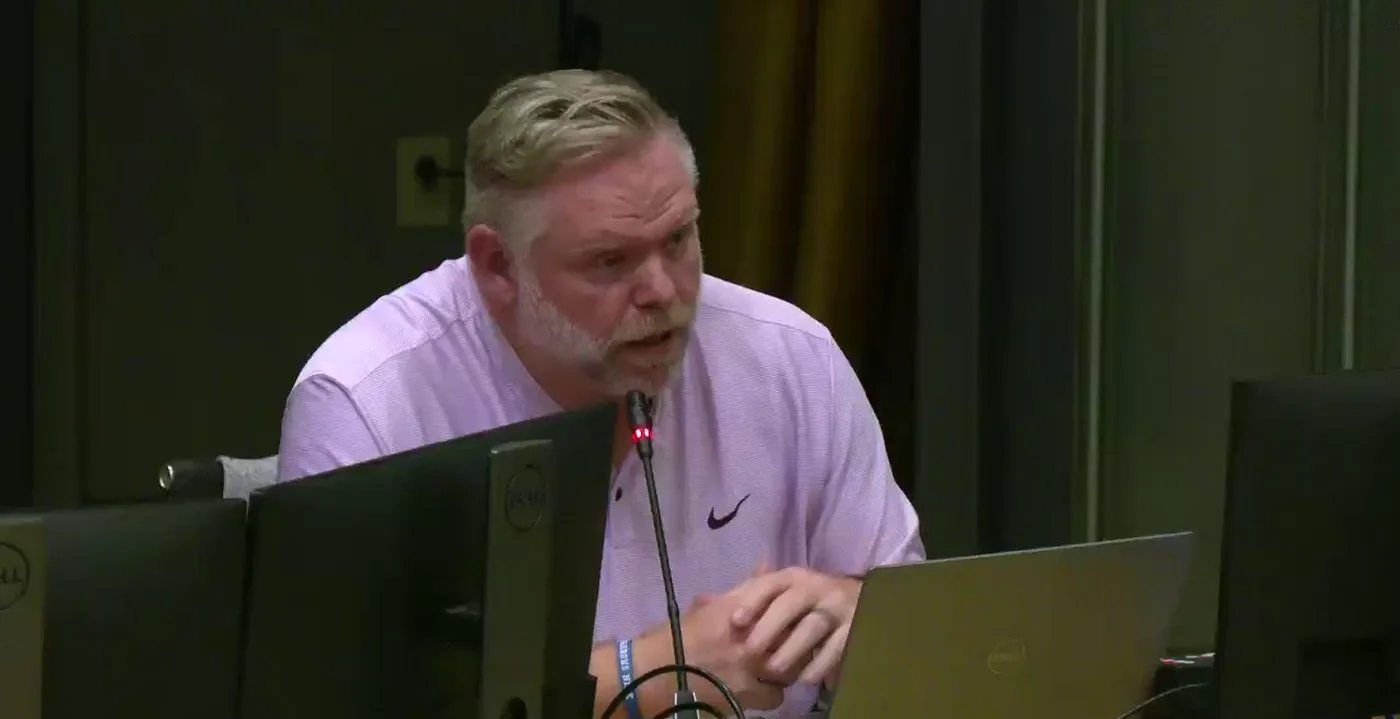
BREMERTON — Residents used the first public hearing on Bremerton’s proposed 2027-28 budget Wednesday, Nov. 18, to ask whether money from this year’s fire levy and the doubled car-tab fee is going where voters and the council were told it would.
Finance Director Mike Riley said every dollar of the roughly $3 million a year from the voter-approved levy lid lift will go to fire service: nine new firefighters, upgrades to Fire Station 1, and the replacement of two engines and a ladder truck.
“There is not additional, uh, any additional items, uh, earmarked for the $3 million. It is all going toward fire safety,” Riley said.
The council took no action. Its second hearing and planned vote are Dec. 2.
Where’s the money for fire trucks?
Jeff Coughlin of District 3 said the budget pays for the firefighters and station work, but doesn’t clearly show money being set aside for the engines and ladder truck, which are scheduled for 2029 and 2030 at a cost of $4.9 million. He also noted the fire department’s budget rises about $1.4 million in 2027 and $2 million in 2028, less than the levy brings in.
“If the other million plus of this levy money is going to some other city service besides fire, which the ballot does allow, um, I think citizens should be told where that money’s going,” Coughlin said.
Riley said long manufacturing lead times pushed delivery of the apparatus from 2028 to 2029 and 2030. The money will flow from the general fund into the city’s equipment replacement reserve, not the fire department’s budget, and be used to buy the trucks from there, he said. The relatively large general fund balance is partly money being held for those future purchases, he said.
Asked by Councilmember Jennifer Chamberlin whether that reserve could be used for police, Riley said the money has not been identified for anything but fire replacement.
Car tabs and streets
Coughlin also said the council doubled the city’s car-tab fee from $20 to $40 in August, and staff said Nov. 5 that about $400,000 of new money would go to residential streets. But he said the budget book doesn’t mention the fee, and total street fund revenue rises only $62,000 next year.
Riley said the budget format isn’t well suited to showing car-tab spending, and that the money is largely in the transportation capital program for work such as chip sealing, paving and sidewalks. He said staff will try to show car-tab dollars in more detail in the final budget book. The $40 fee takes effect March 1, 2027.
Reserves and raises
Former Councilmember Roy Runyon, speaking online, objected to the size of the projected reserves. “Every dollar in excess of what we really need, truly need, beyond reserves, um, is do- a dollar you take out of someone’s budget for paying for groceries and medical expenses,” he said.
The proposed budget projects a general fund ending balance of $13.2 million at the end of 2027, about 19% of spending, and $8 million at the end of 2028, about 11.5%. City policy requires 8.5%, and the Government Finance Officers Association recommends about 16.7%, or 60 days.
Riley said the general fund spends about $5 million a year more than it takes in, a gap the city has to keep closing, though the city has finished recent years better than budgeted. In 2024, a projected $7.6 million gap turned into a $1.4 million surplus, according to his presentation.
Answering Runyon, Riley said non-union managers and professionals will get the same 3.8% cost-of-living raise in 2027 as Teamsters employees. The police contract is in negotiation.
By the numbers
– Citywide: $383.2 million in revenue and $409.3 million in spending over two years, including capital projects.
– General fund: $68.8 million in 2027 and $69.3 million in 2028, about 69% of it personnel. Police and fire are the largest departments.
– Insurance costs have grown more than 220% in five years, and jail costs from $1.9 million to $3.6 million, Riley said.
– Water, sewer and stormwater rates rise 3% in January, taking the typical home’s monthly bill from $137.74 to $141.88.
– The largest transportation project is the Warren Avenue Bridge, budgeted at about $12 million a year in 2027 and 2028.
Parks Director Tim Barker said park security cameras in the budget would be used to review theft and damage after the fact. The brand hasn’t been chosen and will be bid, he said.
The proposed budget is at bremertonwa.gov/1454/2027-2028-Biennial-Budget. The Dec. 2 meeting begins at 5:30 p.m. at City Hall, 345 Sixth St. Comments can be sent to City.Council@bremertonwa.gov.

Leave a Reply